

In the wake of the tragic death of two-year-old Awaab Ishak, the UK introduced Awaab’s Law, a legislation designed to address the dangers of damp and mould conditions in social housing.
These conditions played a significant role in causing severe respiratory issues, ultimately leading to Awaab’s untimely death. As part of this law, from October this year (2025), social landlords will be legally required to identify and fix dangerous living conditions, including damp, mould and condensation issues, within homes.
But how do you ensure compliance with these new regulations while managing the practicalities of everyday operations? This is where MARKUS comes in, offering a comprehensive solution to help surveyors capture and report data on damp, mould and condensation (DMC) in a way that is both efficient and legally sound. Here’s a breakdown of how MARKUS can assist you in conducting DMC surveys and meeting the requirements set forth by Awwab’s Law.
Understanding Awwab’s Law and the Importance of DMC Surveys
Awaab’s Law specifically mandates social housing landlords to investigate and resolve any dangerous housing issues, and damp, mould and condensation are at the forefront of these concerns. The law was enacted following the tragic incident, and now the focus is on making sure that landlords take the necessary steps to maintain safe living conditions for tenants.
The key takeaway from Awaab’s Law is that DMC issues are not just cosmetic but they’re dangerous. Mould and dampness can lead to significant health issues, particularly for vulnerable individuals, including children and the elderly, so it’s vital to address these problems quickly and thoroughly.
How MARKUS Helps in DMC Surveys
At the heart of MARKUS is its ability to tailor surveys to capture the exact data your clients need, whether that’s for damp, mould and condensation, safeguarding issues, or other aspects of disrepair. Here’s how MARKUS can streamline the process of managing DMC surveys:
1. Customisable Survey Setup
One of the standout features of MARKUS is its back office survey setup tool. You can design customised surveys that capture all the relevant data, including damp, mould and condensation locations, severity, and resident awareness. Whether you’re following a standard template or creating a more specific survey to meet your client’s needs, MARKUS offers flexibility.
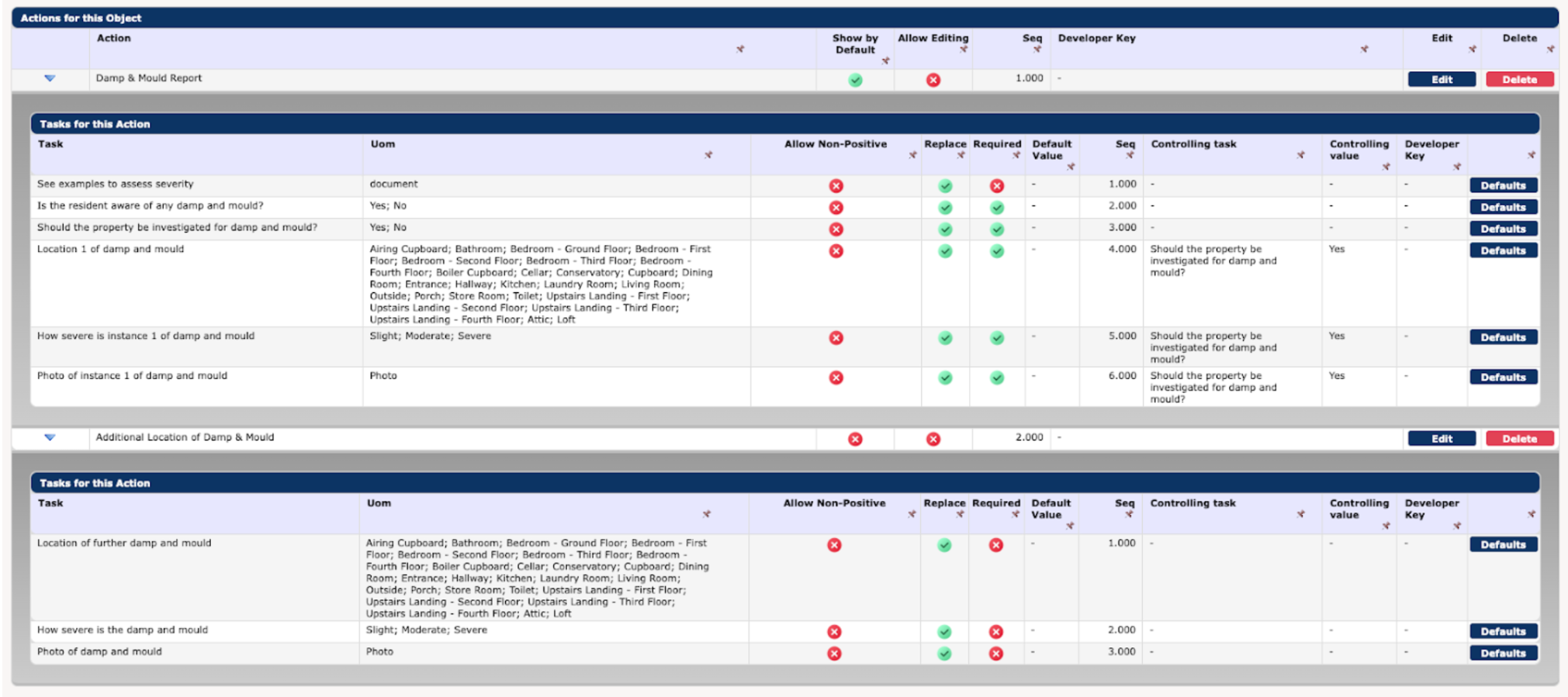
For example, surveys related to DMC can include:
- Location identification (which room or area is affected)
- Severity ratings (mild, moderate, severe)
- Resident awareness (Are the residents aware of the mould, condensation or damp? Yes/No)
- Photo capture (to document the condition visually)
This level of detail helps ensure comprehensive reports that can be used to meet legal compliance under Awaab’s Law.
2. On-Site Data Capture with the Mobile App
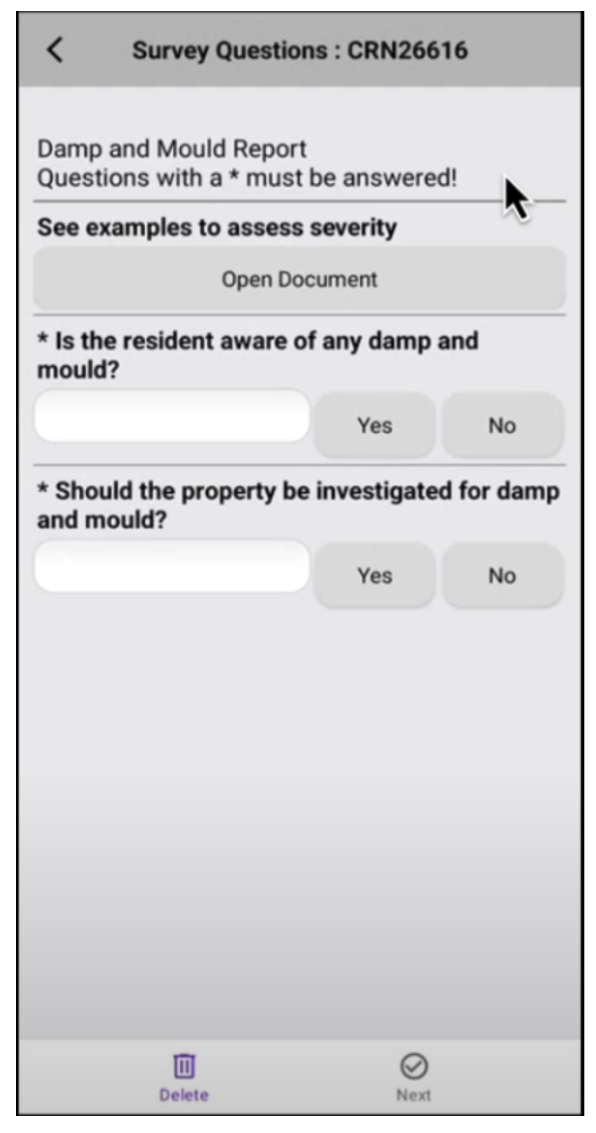
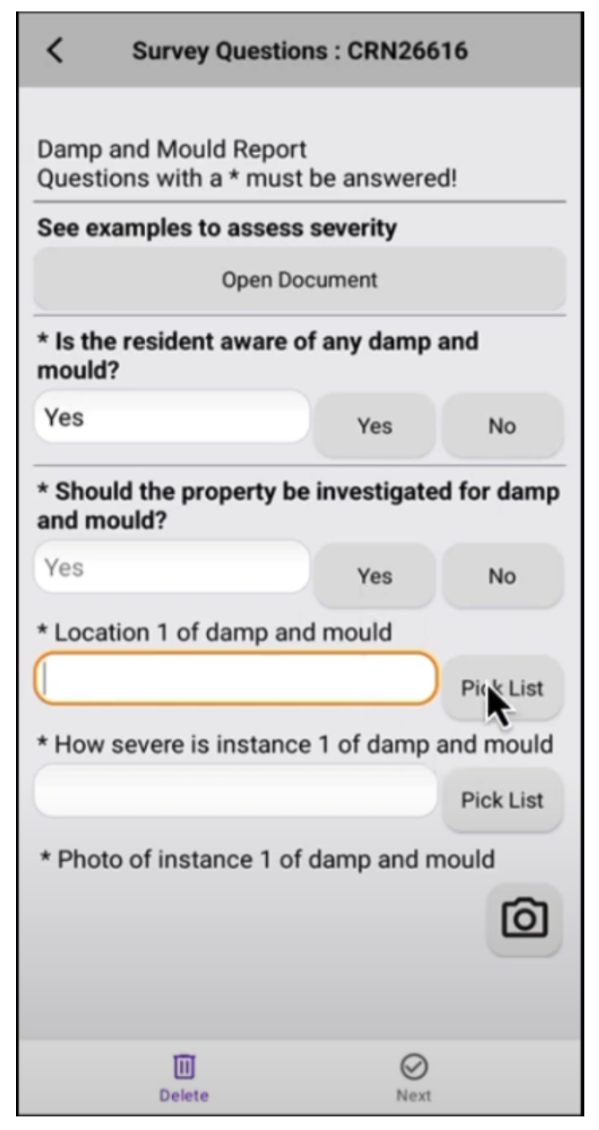
Once the surveys are set up in the back office, the field operatives can use MARKUS’s mobile app to collect data directly on-site. For example, if an engineer finds damp, mould or condensation in a property, they can:
- Take photos of the affected areas
- Answer questions about the severity and location
- Add additional locations if multiple areas are affected
The mobile app then sends all the captured data back to the back office in real-time, allowing you to quickly review, assess, and report.
3. Streamlined Reporting and Documentation
After collecting the survey data, MARKUS makes it easy to create clear, detailed reports. The system generates a PDF report of the DMC survey, which includes:
- Job details
- Survey responses
- Photos documenting the affected areas
- Additional locations, if applicable
This report can be shared with clients directly from the system via email. No more manual transcription or re-entry of data—everything you need is at your fingertips.

4. Real-Time Dashboard for Monitoring
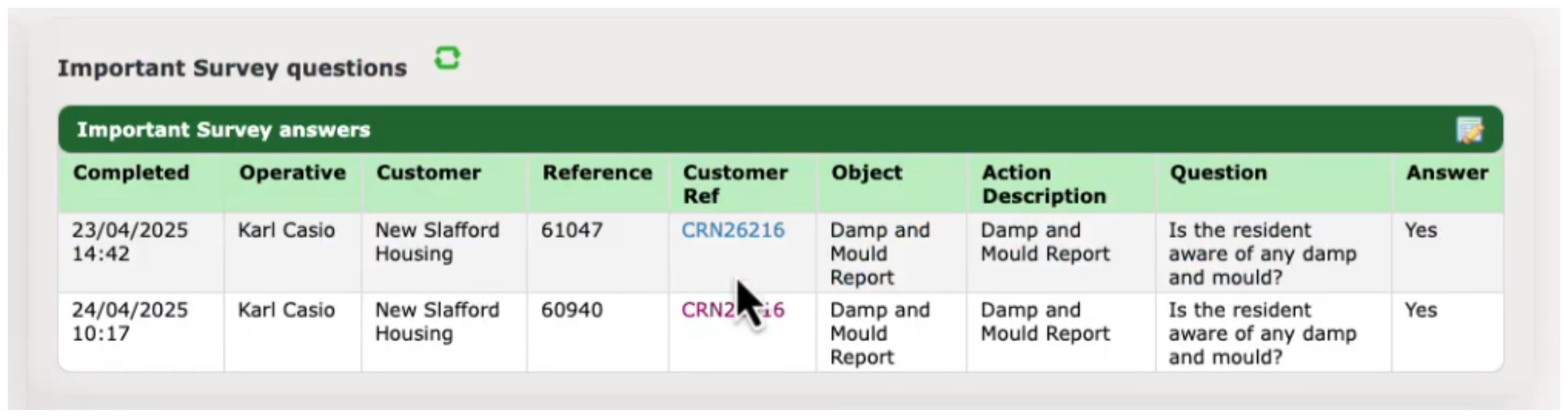
MARKUS’s dashboard allows you to track any instances of DMC in real-time. You can set up filters to quickly identify:
- Jobs where the resident is aware of damp, mould and condensation
- Reports marked as severe
- Any other conditions you wish to monitor
This feature ensures that you’re always aware of issues as they arise, and you can act promptly to ensure that repairs are scheduled in a timely manner.
5. Comprehensive Reporting Tools
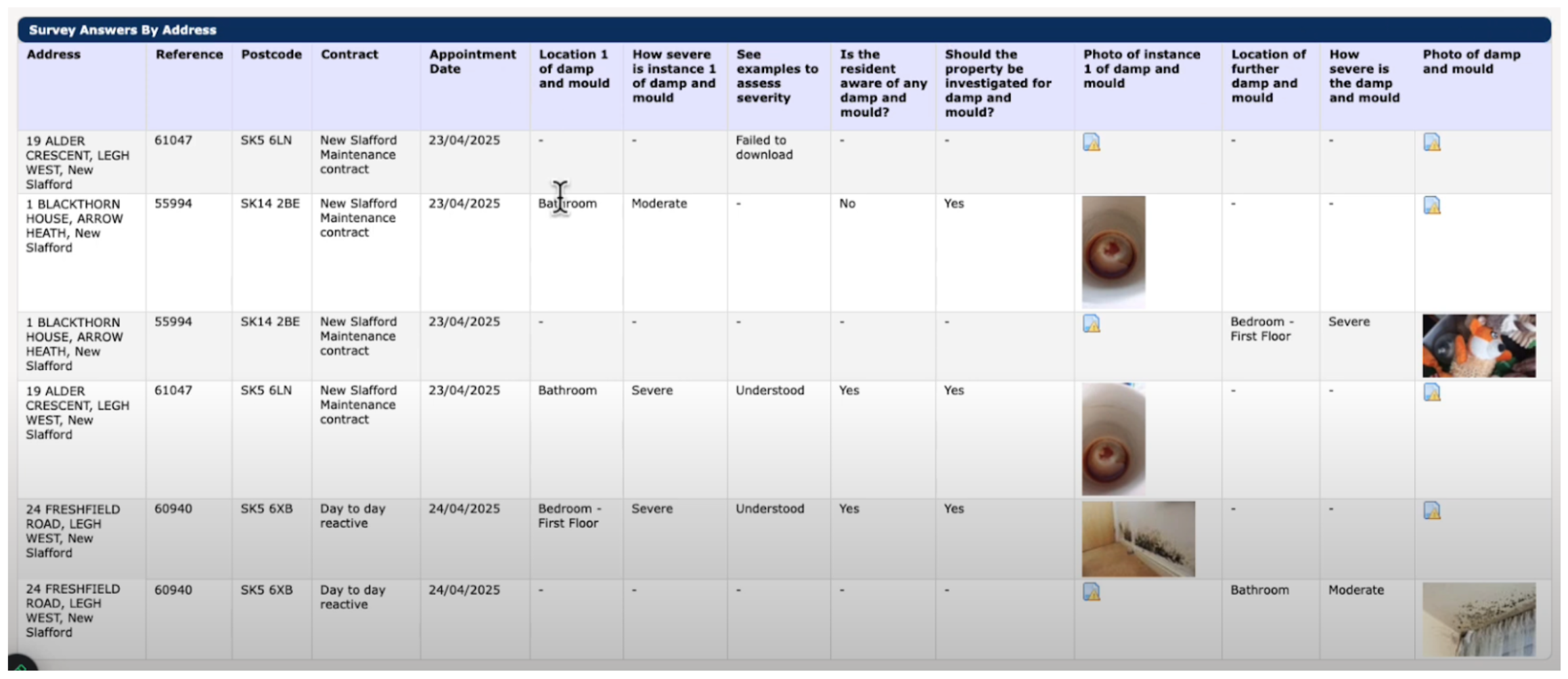
Beyond individual job sheets, MARKUS offers a range of reports that allow you to track trends and data across multiple properties. The Survey Answers by Address report can help you generate summaries of all damp and mould surveys completed within a specific time frame. You can also filter the results by client, severity, or specific questions, offering even more granular insight into the state of your properties.
Ensuring Compliance with Awaab’s Law: What’s Next?
By integrating MARKUS’s customisable surveys and mobile app capabilities into your daily operations, you’ll be well-equipped to handle the demands of Awaab’s Law. The system’s intuitive setup and real-time reporting features make it easier to:
- Capture and document damp, mould and condensation issues
- Provide thorough evidence for compliance
- Share findings with clients in an efficient manner
Whether you’re conducting routine checks or responding to specific complaints, MARKUS ensures that you can maintain safe and healthy living conditions for your tenants while staying compliant with the law.
Conclusion
Awaab’s Law has introduced a necessary shift in the way we approach damp, mould and condensation management within social housing. With MARKUS, you don’t just get a tool to capture data—you get a powerful platform to help you comply with the law, safeguard tenants’ health, and efficiently manage your operations. From customisable surveys to real-time reporting, MARKUS is here to support you every step of the way.
If you’re ready to streamline your DMC surveys, get in touch with us today to learn more about how MARKUS can help!

