

by Jessica Yates
Welcome to another Your Future Today, this time about space. When I think about living in space, I think of the ideas created in Star Wars, Star Trek and the hitchhiker’s guide to the galaxy.
This fictional world has made the reality of space exploration seem like a distant dream. This is not the case and there are many countries, companies and individuals working towards this goal everyday. But how close are we to living in space?
The International Space Station (ISS)

Although we may not yet be living on another planet, the human race has been living in space for over two decades. The ISS was first inhabited in 2000 by a crew of three: Bill Shepard, Yuri Gidzenko, and Sergei Kirkalev. Their mission was to complete the necessary tasks to bring the ISS to life. Since then, there has been a continuous human presence onboard the ISS.
This magnificent structure represents the scientific and engineering abilities of 15 countries working together to advance our understanding of the world around us. At 94 metres wide and 109 metres long, weighing 460-tons, the ISS has now been a home for 276 individuals from 22 different countries around the world. To make this possible, the ISS has six sleeping quarters, two bathrooms, a gym and a 360 degree view bay window. With the idea of living in space for short periods of time accomplished, where do we go next?
Axiom Space

Axiom Space, founded by Kam Ghaffarian in 2016, is a privately funded space infrastructure development company based in Houston, Texas. They are currently in the process of designing and building the world’s first commercial international space station.
Their aim is to host people, research and manufacturing – allowing the development of technology that is only available in microgravity. With an aim to launch by 2026, could Axiom Space be creating the opportunity for more of us to venture into space and provide new scientific and technological breakthroughs that could change the world?
SpaceX
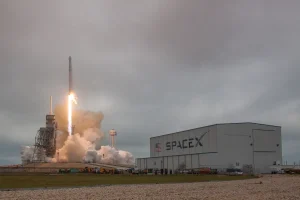
SpaceX, founded by Elon Musk and Tom Mueller, is currently in the middle of development of starships. This development is happening at Starbase, one of the world’s first commercial spaceports. The starships being created are designed for use in payload delivery to earth atmosphere and beyond, the development of a moon base to support further space exploration, faster transport around the globe, and interplanetary exploration.
How does this contribute towards the idea of humans living in space? The answer, SpaceX is taking steps to get humans on Mars by 2029. Mars and beyond is a program designed to breach the next step in space exploration by making the human race a multi-planetary species.
In an interview with the head of TED, Chris Anderson, Elon Musk discussed the plan to place humans on mars. During this interview, Elon discussed the idea that creating a self sustaining community on Mars would require around 1 million people. With the production of starships already underway, the company hopes to have around 1000 starships, each with the capacity to hold up to 100 people, to begin this evolutionary step throughout the 2030s.
Conclusion
With many others creating their own plans to venture out into the unknown, it is impossible to know what we will discover across the next decade. Could humans be living in space in the next decade? Could a new scientific breakthrough change the course of reality? Who knows what the future holds.
If you wish to find out more about the topic discussed in this blog post, please see the following websites:
ISS – https://www.issnationallab.org/about/about-the-iss-national-lab/
Axiom Space – https://www.axiomspace.com/axiom-station

