
by Zahir Bobat
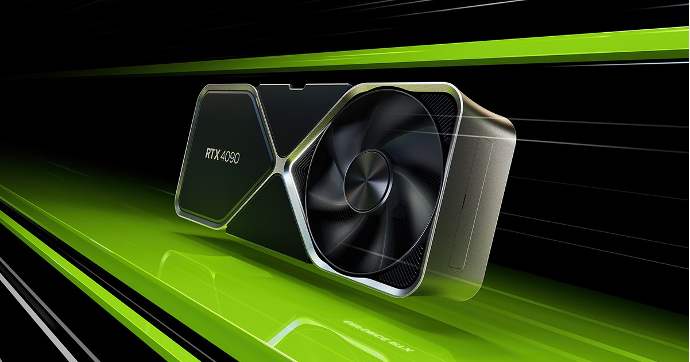
With the release of the new RTX 5000 series of graphics cards coming later this year it’s a good time to talk about what it is that makes Nvidia graphics cards so valuable to the world of tech.
Graphics cards first came about in the 1960s in systems that utilised them for graphics processing. Early on graphics cards were mostly used for scientific and engineering applications; however these cards were often very large and expensive. In the 1970s, with advancements in microprocessors and integrated circuits, graphics cards became cheaper and the first commercially available graphics card was produced by IBM in 1981, however it could only display text. In 1987 IBM introduced the VGA (Video Graphics Array) which is a video display controller which improved the visual quality that was available and became widely used by most computer manufacturers for many years.

With the rising popularity of video games and 3D graphics, 1992 saw S3 graphics launch the first graphics card that could display 2D and 3D graphics. This was the start of dedicated graphics processing units (GPUs). In 1995, Nvidia came onto the scene with the NV1 which could handle 2D and 3D graphics and supported the Sega Saturn game controllers. At the same time ATI technologies (which became AMD in 2006) also released a similar graphics card, providing Nvidia with serious competition. During the 2000s the competition between Nvidia and AMD resulted in massive improvements in graphics processing that meant gamers benefitted from better quality graphics.

Graphics cards then became extremely popular for more than just gaming, for applications like video editing, scientific simulations, data analytics, Self Driving cars, AI and more. Nvidia graphics cards became extremely popular for crypto-currency mining because they are able to perform the calculations necessary to the extremely complex verification that is needed to complete a transaction better than traditional CPUs. Nvidia was recently valued at $3 trillion, which it was only able to achieve thanks to the role it plays in the AI space – most of the AI platforms provided by Amazon, Google, Meta and Microsoft use Nvidia specialised AI GPUs to power the AI solution. Because of this Nvidia has attained a ‘Quasi Monopoly’ in the AI graphics industry.
I personally own a Nvidia RTX 3090 that I use for gaming that gives me extremely good performance on resource heavy games. It can also compute extremely realistic reflections that can make games look very lifelike. At EPIX we currently don’t use GPUs to improve our services because GPUs don’t provide much benefit to web servers. However, there is a possibility that we could use Nvidia GPUs to improve the server that sends and receives data from the mobile app. This is something that I will be looking into in the future and, if it’s something that could speed up our services, we could look to incorporate it into our server stack.
Sources :

